Sleep & Policy Research
Predictive and exploratory analysis of sleep quality and sleep duration across 61 countries to study how Daylight Savings Time (DST) relates to population-level sleep patterns. Finds that DST-observing countries show higher average sleep duration and sleep quality overall, with latitude moderating the effect.
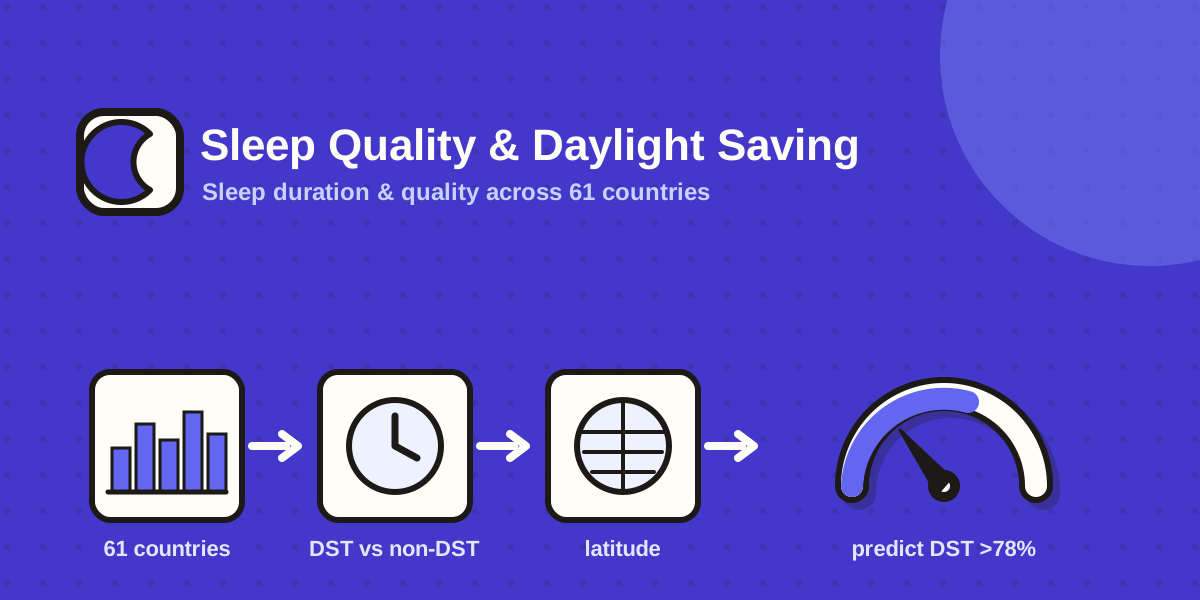
Daylight Savings Time (DST) is defended as a way to shift daylight later, and criticized for disrupting circadian alignment. This paper analyzes publicly available sleep statistics across 61 countries and compares sleep quality and duration between DST and non-DST regions. It adds geographic variables (including latitude) and daylight metrics to examine when DST’s relationship to sleep patterns appears beneficial versus negligible. Results show that DST-observing countries have higher average sleep duration and sleep quality overall, but the effect is moderated by latitude, suggesting that geographic context matters in evaluating DST’s trade-offs.
How do sleep quality and sleep duration differ between DST and non-DST countries, and does geographic latitude moderate DST’s relationship to sleep outcomes?
Sleep statistics aggregated at the country level are combined with derived geographic variables (DST observance, hemisphere, latitude) and seasonal daylight metrics. The paper reports correlation analysis, exploratory visual comparisons between DST and non-DST groups, and supervised classifiers that predict DST implementation from latitude and seasonal light variation.