Market Access AI
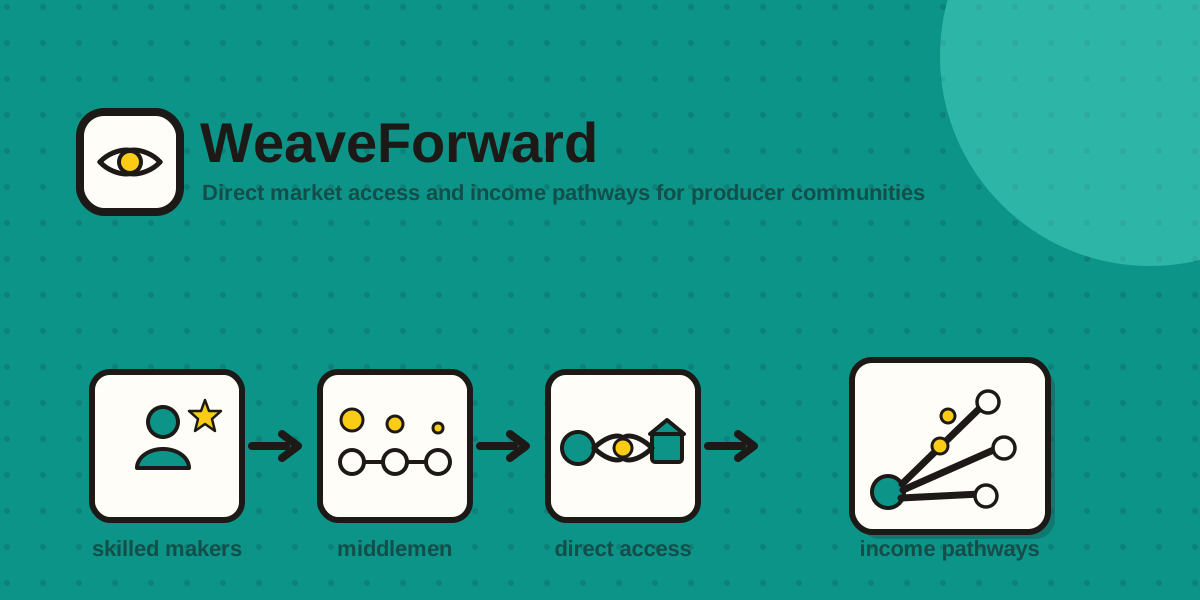
Skilled producers in low-income settings often earn a fraction of the final sale price, because reaching buyers means passing through layers of intermediaries — and no amount of product quality changes that. This research asks whether AI-mediated coordination can open more direct, durable paths to market, and how to tell whether such an intervention actually improves livelihoods rather than simply adding another layer.
Producers in low-income settings frequently face persistent market-access gaps that are structural — enforced by long intermediary chains rather than by any deficit in skill or output quality. This thread studies whether technology can open more direct paths to market in that setting and, just as importantly, how to measure whether an intervention genuinely improves livelihoods rather than merely shifting where value is captured. It draws on agentic and multi-agent coordination, field deployment, and careful real-world evaluation, with active field partnerships as its testbed. Faculty-advised.
Skilled producers in low-income settings earn a fraction of what their work finally sells for, because reaching buyers means passing through layers of intermediaries. No amount of product quality changes that — the gap is structural.
AI-mediated coordination that opens more direct, durable routes to market, deployed and measured in the field — with honest evaluation of whether livelihoods actually improve rather than value simply moving elsewhere.